
Rebecca Van Hulle
How to Create a Seasonal Farmhouse Foyer Using What You Already Have
By Rebecca Van Hulle | Birch Hill Farmhouse
A small foyer doesn’t need a lot of space to make a beautiful first impression. For me, seasonal decorating is less about buying something new and more about looking at what I already have with fresh eyes.
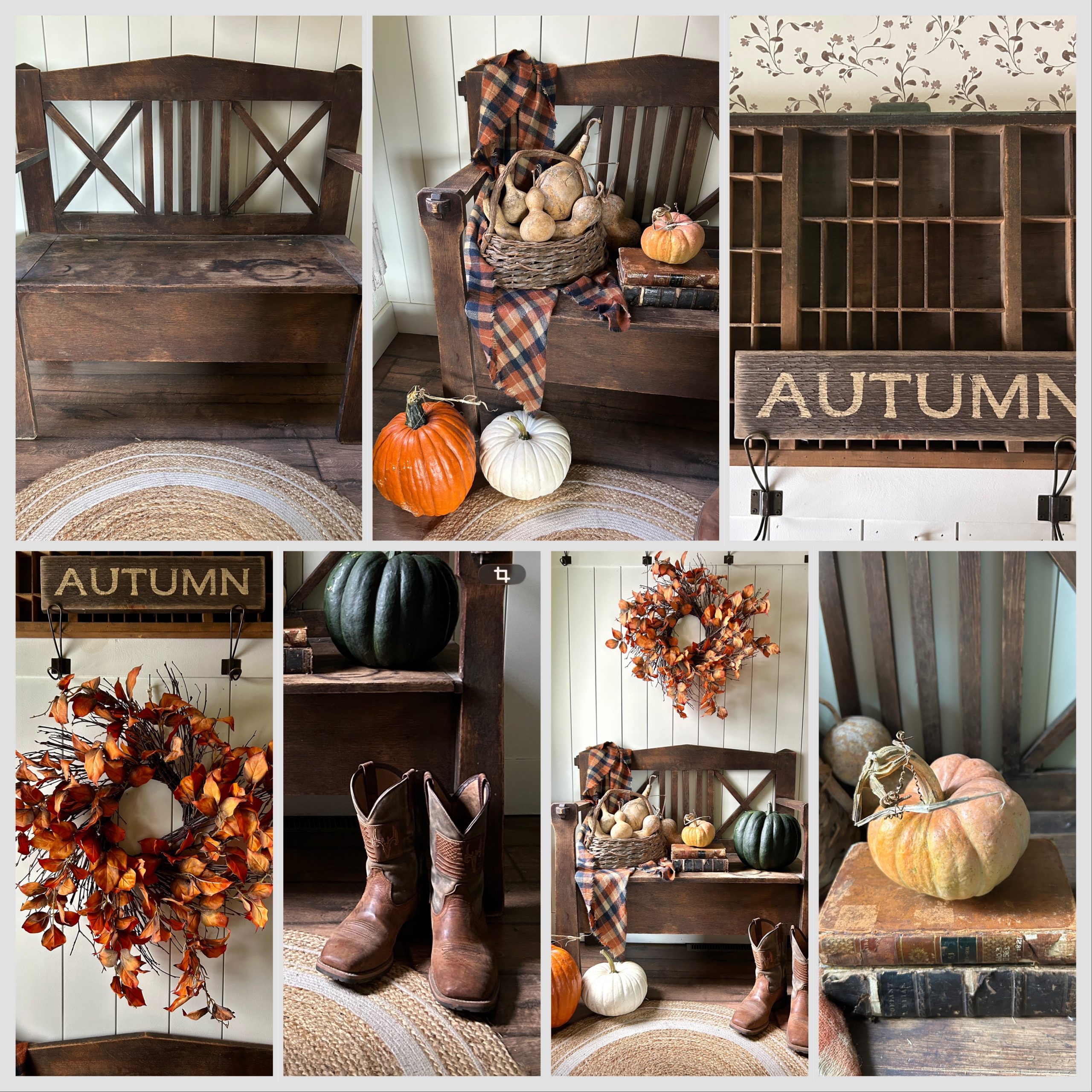
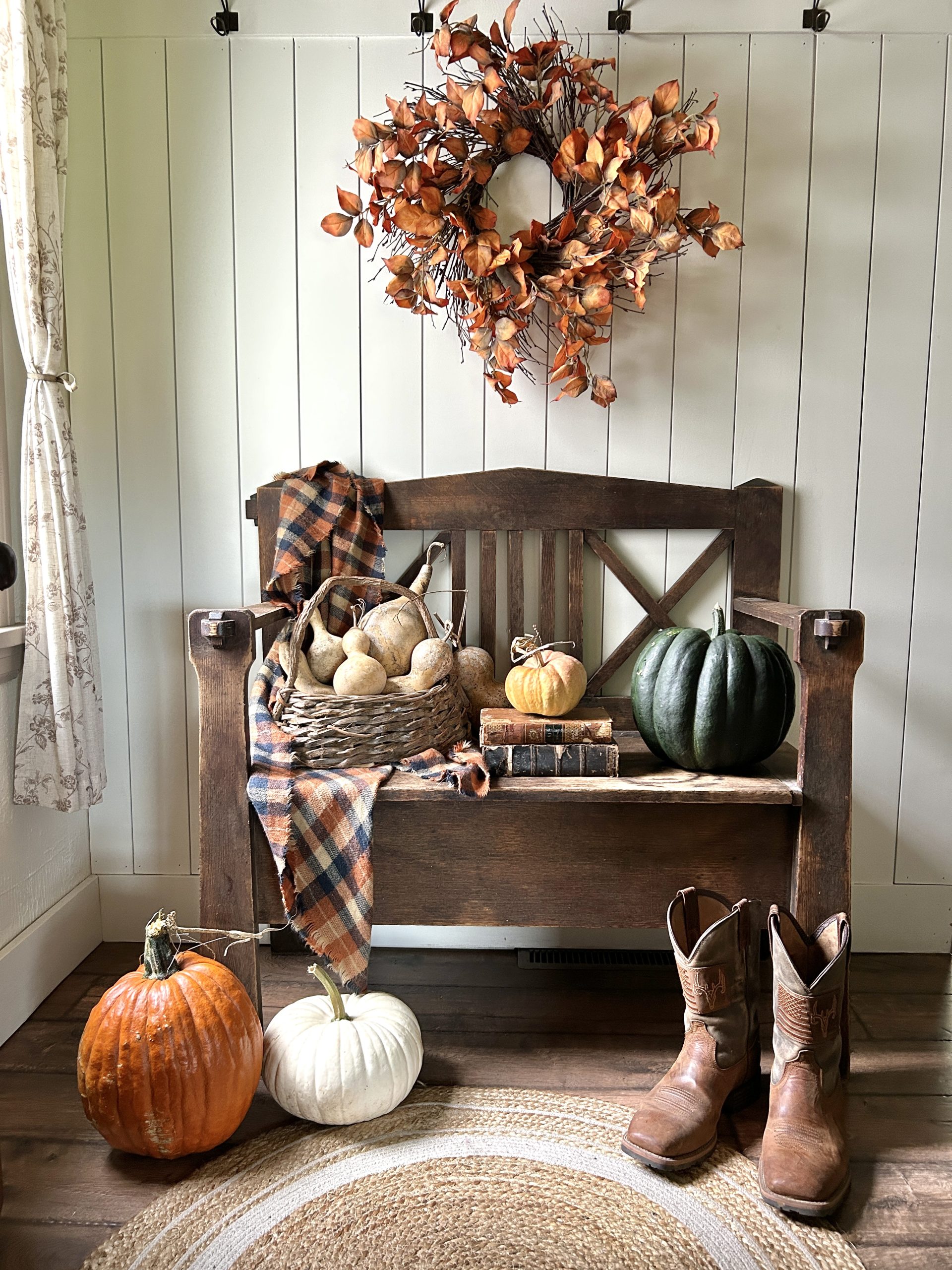
This autumn, I transformed my small farmhouse foyer using an old twig wreath, floral stems I had saved from my home décor shop, pumpkins grown in my own garden, vintage-inspired pieces, and one of my antique benches.
The result is a warm autumn welcome that feels collected, personal, and connected to our 1920s farmhouse.
The trick to styling a small foyer
When you’re working with a small entryway, I like to begin with one main piece of furniture.
I have several benches that I rotate throughout the year. Changing the bench gives the space an entirely different feeling without changing the footprint of the foyer. For this autumn display, I chose an antique wooden bench with plenty of character.
The bench provides both function and a surface for layering seasonal pieces.
From there, I work upward, adding something to the wall and then bringing the seasonal elements down toward the floor.
Think of it as three layers:
- The foundation: a bench or small piece of furniture
- The focal point: artwork or a print, an architectural piece such as a vintage print tray, or a wreath
- The finishing touches: textiles, baskets, pumpkins, books, boots, and natural elements
This simple formula works especially well in a small space because it creates visual interest without overcrowding the entryway.
Step 1: Start With What You Already Have
Before buying anything, I walked around my home and gathered pieces that could be repurposed for fall.
I knew I wanted the display to feel authentically farmhouse, so I reached for pieces with age, texture, and natural imperfections.
The bench became my foundation, while a vintage-style print tray above it provided height and character.
I also pulled out a plaid throw, an old basket, vintage-looking books, and a pair of worn cowboy boots.
My goal wasn’t to make everything match. I wanted everything to feel collected.
That’s one of my favorite things about farmhouse decorating—the most interesting spaces often come from combining things that have a story.
Step 2: Create a Seasonal Focal Point
Every small entryway needs a focal point.
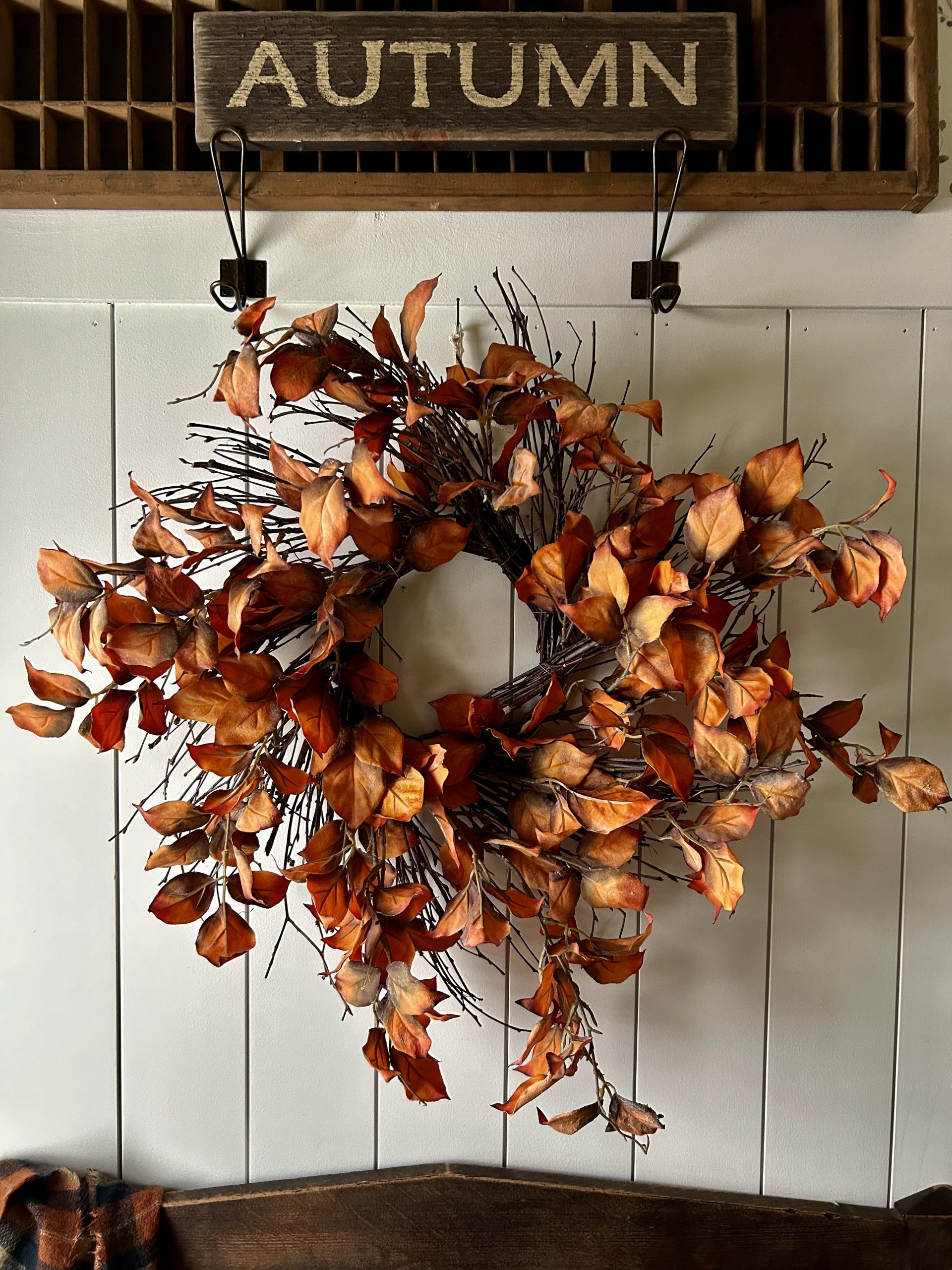
For this space, I decided to make my own autumn wreath.
Instead of purchasing a new wreath, I pulled out an old twig wreath base that I already had. I also had several autumn stems tucked away from previous decorating projects from my home décor shop.
I simply layered the stems into the existing wreath, working around the base until I achieved the fullness and shape I wanted.
I didn’t worry about making it perfectly symmetrical.
This is one of my favorite ways to decorate seasonally: reuse the foundation and change the details.
An old wreath base can become a completely different decoration simply by changing the stems.
Step 3: Bring the Garden Indoors
One of the most meaningful parts of this autumn display is the pumpkins.
Rather than purchasing all of my pumpkins, I used pumpkins grown in my own garden.
I love incorporating things from our property into our home because they make seasonal decorating feel more personal. No two pumpkins have exactly the same shape, color, or texture and that’s part of the charm I love.
I grouped pumpkins in different sizes and colors rather than placing them all together.
A larger orange pumpkin anchors the floor, while smaller pumpkins and gourds are layered into a basket and across the bench.
The variation creates a more natural, abundant look.
Don’t be afraid of imperfections. A crooked stem, unusual shape, or slightly different color can be exactly what makes a display feel authentic.
Step 4: Layer Texture
Once the larger pieces were in place, I began adding texture.
I draped a plaid throw over the arm of the bench and allowed part of it to fall toward the floor.
A woven basket filled with gourds adds another layer of natural texture, while old books give the arrangement height and that extra sense of coziness.
Then I added a pair of old cowboy boots to the floor.
These aren’t pieces I chose simply because they are “fall décor.” They help tell the story of the home.
Texture is especially important in a small space because you don’t need many objects to make an arrangement interesting.
Wood. Woven fibers. Plaid. Twigs. Pumpkins. Aged books. Leather.
Each material brings something different to the display.
Step 5: Decorate in Threes Then Step Back
When I begin arranging a vignette, I often work with groupings of three.
For example, on the bench I combined:
a basket + books + pumpkins
On the floor:
a large orange pumpkin + smaller white pumpkin + boots
And on the wall:
the vintage print tray + autumn sign + wreath
These groupings create balance without making the arrangement feel too perfect.
There is one final step I always take:
I walk away.
I’ll look at the space from the other side of the room, from the doorway, and from the angle someone would see it when entering the house, I also use my camera and take a picture of the space.
Sometimes the piece I thought needed to be moved five inches really does.
Sometimes I remove something entirely because it makes the space look too crowded.
Decorating isn’t finished when everything is placed. It’s finished when the space feels right.
The Finished Foyer
The finished space is small, but it now feels like an intentional autumn welcome.
The wreath draws the eye upward, the bench creates a natural anchor, and the pumpkins bring the colors of the season inside.
Most importantly, nearly everything came from things I already owned or grew myself.
That’s what I love about seasonal decorating.
You don’t have to completely redecorate your home every season. You simply need to look at the pieces you already have in a new way.
A different bench.
A different wreath.
A new combination of textiles.
Something gathered from the garden.
A few meaningful pieces moved from another room.
Those small changes can completely transform a space.
And in a small foyer, that’s all you need.
A Farmhouse Styling Formula that I personally use:
1. Choose your foundation. Start with a bench, small table, chest, or chair.
2. Add height.
Use a wreath, architectural salvage, artwork, or seasonal sign.
3. Bring in nature.
Use pumpkins, branches, dried flowers, pinecones, greenery, or something gathered from your own yard.
4. Add texture.
Think woven baskets, quilts, plaid, wood, metal, and aged finishes.
5. Layer rather than line up.
Place pieces at different heights and depths.
6. Use what you have.
Before purchasing something new, shop your own home, garden, attic, or storage room.
7. Leave a little breathing room.
A small foyer can become visually crowded quickly. If something doesn’t seem right, remove it.
Seasonal decorating doesn’t mean you have to go out and purchase everything new. Sometimes the most beautiful vignettes are created with all the things you have collected at home.